 Image 1 of 2
 Image 2 of 2
Description:
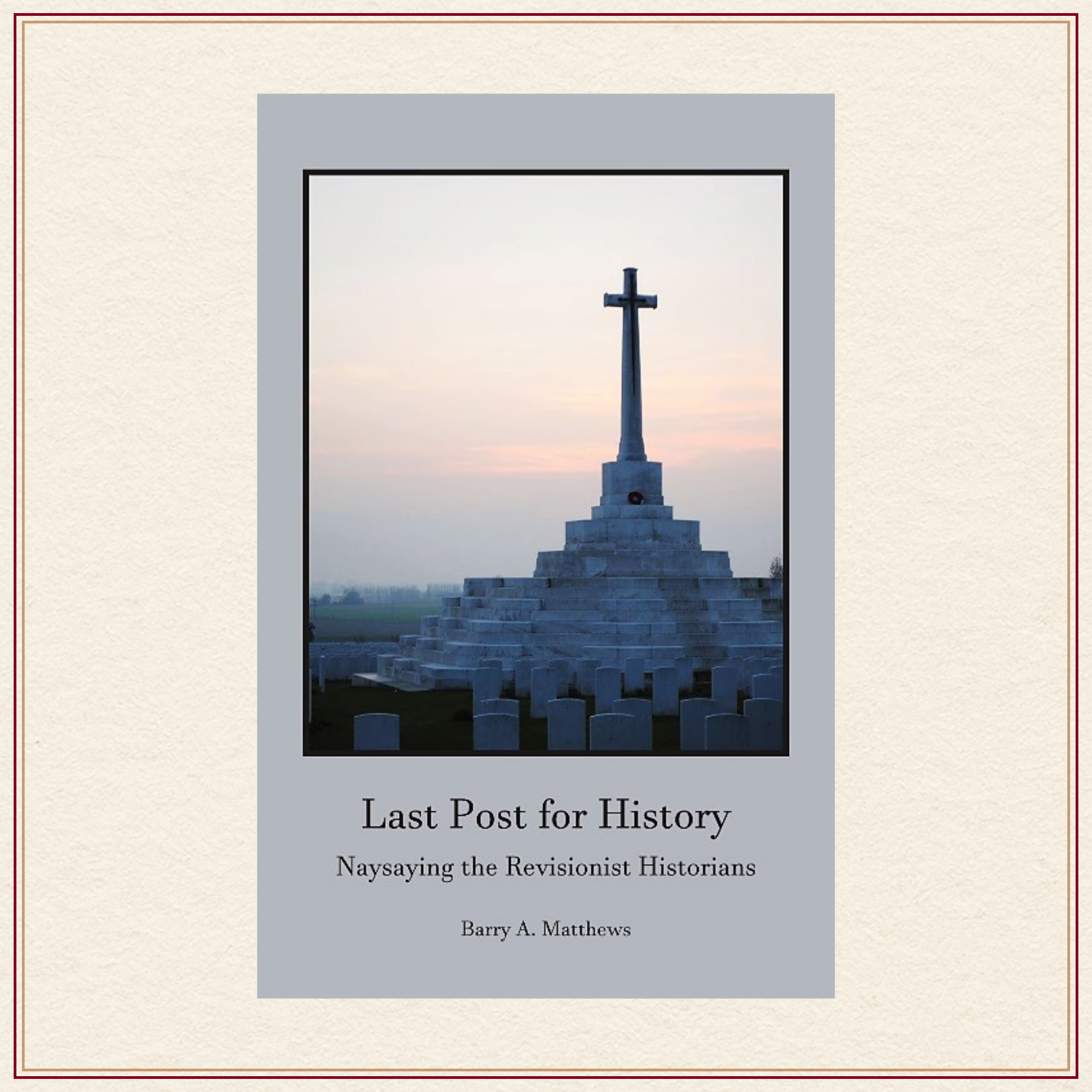
Last Post for History explores the fundamental different interpretations of the Great War from the governmental appropriation of remembrance that emphasised the meaningfulness of the sacrifices, to the view, frequently held by many of the survivors, that the war had been overly-prolonged and was ultimately futile. The first view was an Establishment view. It emphasised justification for the conduct of the war and exonerated the class of people who directed all aspects of that war. Having appropriated the narrative that would mould the legacy of the war it set out to ameliorate and assuage the losses by a programme of building monuments to victory and memorials to death.
The alternative view, the combatant’s view, was very different and was largely suppressed and denied the oxygen of publicity until the early 30s, by which time the cultural history had been inculcated and reinforced by the Establishment’s version of events in the form of official publications, official battalion histories, official divisional histories and the early, government-sponsored Official History of the Great War. Such publications emphasised the meaningfulness of the fighting and the glory of the sacrifices.
When finally the voices of the survivors were raised it was because further disillusioned that the post-war world had failed to deliver a world fit for heroes and emboldened by a growing Labour movement, many felt that the truth had not been told and they felt compelled to tell it. British and Commonwealth forces died in their hundreds of thousands, exacerbated by repeated moribund tactics.
Many of the ordinary soldiers who had witnessed the horrors of war saw the government’s interpretation as patriotic myth-making and challenged it with their own accounts of the truth. These ‘war books’ established, by sheer weight of numbers, the soldiers’ interpretation that the war had been futile. These ‘war books’ created a literary divide. It manifested itself as a political and cultural schism defined by class. A lost generation experiencing the post-war economic wasteland prevailed.
That was until successive right-wing governments have sought to rehabilitate the generals and their reputations and once again beat the drum of British imperial influence. Today the mantra is for Global Britain to be heard on the world stage and with such objectives her history is in need of revivification by the revisionist historians of the right. The prose section of the book shows how this is being orchestrated whilst the poetry section looks at different wars and episodes and demonstrates that war still looks tawdry and horrific.
~/~
Available immediately in paperback at £18.00 Price includes postage.